Electronic Ear

Circuit below is a very sensitive 3-transistor amplifier using a speaker transformer. This can be wound on a short length of ferrite rod as show above or 150 turns on a 10mH choke.
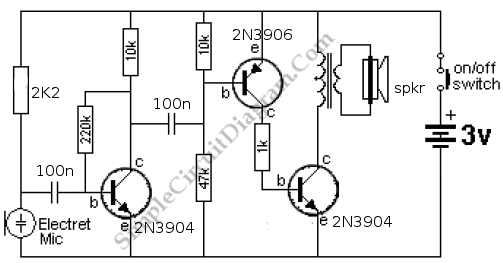
Electronic Ear circuit schematic diagram

The biasing of the middle transistor is set for 3 V supply. During idle conditions and the quiescent current is just 5mA, the second and third transistors are not turned on. This device is very ideal for listening to conversations or TV etc in another room with long leads connecting the microphone to the amplifier.

This entry was posted in Audio and Music and tagged , . Bookmark the permalink.,

Possibly Related to "Electronic Ear" Circuits

  • Dynamic Microphone Pre-Amplifier
    Dynamic microphone uses a moving coil around magnetic field to convert mechanical movement into electrical signal. The ordinary mini speaker is turned into a very sensitive microphone.  Although it looks like misusing the speaker as a microphone, but actually a … Continue reading →...
  • Small Amplifier Using Transistors
    The output of this circuit is push-pull and consumes less than 3mA (with no signal) but drives the earpiece to a very loud level when audio is detected. Because the whole circuit is Dc coupled, its extremely difficult to set … Continue reading →...
  • Small Discrete Audio Power Amplifier
    This is a little audio amplifier, it is similar to the audio amplifier which is used in small transistor radio. This circuit draws about 30 milliamps from a 9 volt supply. This circuit consist of two stage. First stage is … Continue reading →...
  • VOX (Voice-Operated Switch)
    This schematic diagram below show a circuit of VOX Box (voice-operated switch). This circuit consist of a Schmitt trigger, a relay driver, and microphone preamplifier. The microphone preamplifier(U1) receive input signal which will be amplified. THRESHOLD control (R8) is fed … Continue reading →...
  • Max4373 Electronic Circuit Breaker
    This a high-side current amplifier circuit breaker. The circuit-breaker application is possible for that device because  the latching-comparator output (COUT1) on the MAX4373, a high-side current-sense amplifier with reference and comparator. Here is the circuit : This circuit uses MAX4373FESA … Continue reading →...

Comments are closed.